Skip to content

rightmind.life

Providing dyslexia assessment and support services

  • rightmind.life
  • Dyslexia & Assessment
  • Hypnotherapy Essex
  • QHHT
  • Contact & Find Us
  • Privacy and Safety
rightmind.life

Privacy and Safety

Privacy and Safety Notice

  • Privacy & Safety

What’s it like being dyslexic?

https://www.youtube.com/watch?v=IEpBujdee8M&list=PLfzbcraYePbBKTQrHw4-MJERM7wLoF9cq

5 Minute Guided Relaxation

https://youtu.be/tkf04eCgyWQ
A visit to Sigmund and Anna Freud's home...

Services available via rightmind.life

Access a copy of this free screening test via www.rightmind.life
An old fashioned paper checklist!

Learn Multiplication Tables Method in 2 Minutes

Made for teenagers and adults experiencing dyslexia, their family and friends.
A video of less than one minute showing how singing helped me to deal with dyslexia! 
Make your own memory aid to assist with everyday tasks and memorising information with free template
About the short vowel sounds

“Don’t Call Me Stupid”

Living with Dyslexia

Dyslexia is the topic of conversation

Dyslexia is the topic of conversation with my guest Educational Psychologist Dr Sue Warnock who works in association with www.rightmind.life in Chelmsford, Essex and in the an East Midlands. The radio show starts a few minutes in....

LSCWC Spelling Method

Positive Dyslexia and a New Approach to Education – 30 Minute Talk

What’s it like to have a dyslexia assessment?

https://youtu.be/-WVdWteXzHU

Storyboarding, a great way to create your story.

https://youtu.be/rbeRKke1rX4

FEEL GOOD ABOUT DYSLEXIA

Drawing; a wonderful skill to develop

In case you haven't got a computer handy - How to find a word in the dictionary when you don't know how to spell it!

Revision Techniques

How to Mindmap

Why not take a 5 minute relaxation with this guided meditation.

5 Minute Guided Relaxation

https://youtu.be/tkf04eCgyWQ
Are you curious about QHHT? Carolyn Finch offers her testimonial.
An introduction to QHHT, together with a case study, potentially offering a refreshing perspective from which to view self-healing. 
An introduction to the work of 8 experts promoting self-healing for recovery and wellness.
This 40 minute hypnotherapy video/podcast/audio is intended for adults, and teenagers (with parent/carer/guardian permission).
Interested in psychotherapy?

A Guided Meditation for Children by Children

ARU School of Medicine and Holistic Healthcare

Stop smoking with hypnotherapy

10 Minute Meditation

Multi-Sensory Training

The work of the Multi-Sensory Training Centre at Colchester is discussed with my guests Dr Annette Grounds – Behavioural Optometrist, Hayley Green – Primitive Reflex Specialist and Dan Edwards – Dispensing Optician and partner at Patrick & Menzies.

Let food be your medicine

is the topic of conversation with Ruth Gravelle's guest, nutritionist, author and TV chef Juliette Bryant. Starts 6 minutes in.

Brain Injury Care

My guest is Jo Hockey from Headway Essex, a charity providing brain injury care and support. Headway Essex is always on the look out for volunteers, please get in touch with them if you can help.

Brain Injury Awareness

Brain injury awareness week is promoted by Jo Hockley from Headway Essex and Melissa Parker. Melissa experienced a brain haemoridge in 2011 and has been connected with Headway since that time. She describes some of her experiences and how her life has changed since 2011. 

Vision & Dyslexia

Interviewing Professor Bruce Evans, who works as an optometrist based in Shenfield. He is author of Dyslexia and Vision (2001, Whurr), and Vision and Reading Difficulties (2010) for opticians.

Epilepsy Awareness

Iain Blake-Lawson is my guest from South East Essex Epilepsy Support Group. Ian informs us about the issue of epilepsy, describing some of his personal experiences and telling us how people can access information and support in Essex.

A Life Narrative – Dyslexia

Gary Atkinson interviews Ruth Gravelle. Ruth describes some of her strengths and challenges growing up with the dyslexic learning differences and makes links with her present work as a dyslexia specialist, hypnotherapist and volunteer radio presenter.

Grow Your Own Happiness

My guest Deborah Smith  describes mindfulness, positive psychology and her research in this field. Deborah offers some great examples of her work, including how the practice of a loving kindness meditation helps children in schools.

Living with Asperger Syndrome

We talk with Tom Mawdsley, a judo black belt and member of Paralympic Team GB. He describes some of his experiences of living with Asperger Syndrome (ASD), his education, work, socialising, judo and his hopes and dreams.

The Science Delusion

My guest is Gary Atkinson. We talk about Rupert Sheldrake, a biochemist and author whose theories are considered somewhat controversial by the mainstream science, including his book The Science Delusion.

Improving Your Sleep

will be the topic of conversation with Julia Magnay from Live Enriched.

The work of Interact

Supporting disabled and disadvantaged young people with special needs and their families, is the topic of conversation. Ruth Gravelle interviews InterAct employees Susie Nankivell, Lucy Hazell and Ali Perrett. InterAct, amongst other things, supports families to complete applications for Education, Health and Care Plans (EHCP).

Improving Mental Health

The work of Create & Flourish is the topic of discussion on this radio show. My guests are  Triss  Norman and Sharon Chan who work in creative ways to enable adults to improve their mental and/or physical wellbeing. They run Create and Flourish based at Burnham on Crouch, supporting people across Essex.

The Placebo Effect

is described and discussed along with topical music such as, 'The Drugs Don't Work' and 'Lily The Pink'. Ruth's guest is Gary Atkinson who has been investigating some of the research and outcomes of using placebos. These have been across a wide range of applications and how the findings place new challenges upon modern medicine. Identifying what triggers our natural ability to heal is of great interest.

The Freud Museum

  • rightmind.life
  • Dyslexia & Assessment
  • Hypnotherapy Essex
  • QHHT
  • Contact & Find Us
  • Privacy and Safety
rightmind.life Proudly powered by WordPress
Screening Assessment with mini-report 5+

Screening Assessment with mini-report £350.  This type of assessment is carried out by a specialist teacher assessor  (Level 7 with APC). The Test of Dyslexia (TOD); available for people from aged 5 years. The assessment includes tests for language, phonological awareness, processing speed, orthographic processing and reading. The appointment should take no more than an hour. This is a mini-assessment/screener includes a short report of several pages, with suggested interventions.

Ruth Gravelle


Ruth has over 20 years experience as a specialist teacher. She has also worked as a hypnotherapist since 2012, and a Quantum Healing Hypnosis Technique (QHHT) practitioner since 2013 . She is the first point of contact if you would like to discuss the services offered through www.rightmind.life and www.qhhtessex.uk
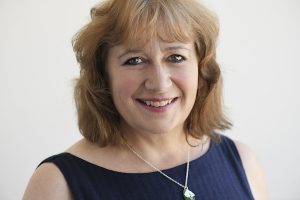
Ruth started her working life as an nursing auxiliary, and care worker. Following her degree studies, she supported adults with learning difficulties and mental health issues, further and higher education students as well as children, and adults in the workplace. Ruth founded and was a director of Dyslexia Rooms at Chelmsford (2006-2014) and has worked as a school SENDCo (KS1-2). She was Principal of Dyslexia Action’s Chelmsford Learning Centre (2014-2016) and presented CCR’s talk show,  Life-Matters, with topics related to dyslexia, health and range of other issues (2016-2017). Ruth’s first book “Inside-out” (2004) aims to enable for teenagers and adults with dyslexia. Ruth also publishes educational, musical and therapeutic videos through YouTube.  

Ruth is a member of the National Hypnotherapy Society (NHS), DSB checked, and belongs to the professional associations for teaching (PATOSS)

Ruth Gravelle: BA (Hons), OCR Dip SpLD, NLP practitioner, Dip Hyp CS, QHHT practitioner and Reiki master.

Online Workplace Needs Assessment

What is a Workplace Needs Assessment (WPN)?

A workplace needs assessment can be carried at the employee’s place of work or online.  A short meeting is held with the employer or line manager and the workplace needs assessor, it can also include HR, before the assessor meets with the employee.  It is a semi-formal interview with an experienced workplace needs assessor to look at the specific job role of an individual, and the specific difficulties that they have as a result of their dyslexia.

The WPN assessor and employee then spend about 1.5 to 2 hours going through any assessment that has been carried out previously, to identify their strengths and weaknesses and what specific areas of their job role they are finding difficult.  If possible, the WPN assessor will observe the employee at work.  This will be in addition to a questionnaire that the employer and employee will be asked to complete, along with a copy of the employee’s job description.  This information will then contribute to a final report which will be sent to the employee and employer.  There is an opportunity to discuss the report with the WPN assessor.

Strategies and reasonable adjustments will be advised that can be implemented to support a dyslexic employee in the workplace. The assessment may recommend coaching that is specific to the individual to help implement the recommendations.   The assessor will also consider the working environment and the specific concerns and requirements of the organisation before making recommendations for reasonable adjustments.

Recommendations can include:

  • Assistive software recommendations
  • Strategies to support the employee within the workplace that are no cost or very low cost to the company. Very often simple adjustments and strategies are recommended that will be all that is needed to improve an employee’s performance and confidence.
  • 1:1 coaching, including support and coping strategies. This is bespoke training based on the individual employee and the individual skills needed for their specific employment. A coaching plan will be devised based on the psychological assessment and information from the WPN assessment.
  • Awareness training for employers and colleagues

You do not need to have had a formal diagnosis of dyslexia, or other neurodiverse learning difference to have a Workplace Needs Assessment. The full WPN assessment will take up to 2 hours.  A report is written and sent within 10 working days.  The cost of a WPNA is £540.00


Workplace Needs Assessments

We provide Workplace Needs Assessments for employees experiencing dyslexic types of learning difference.  Assessments are carried out by independent specialists working in association with rightmind.life. Dyslexia related issues such as difficulties with aspects of organisation, sequencing, remembering instructions, memory, reading, writing, spelling and maths can impact upon well-being and performance at work.

The assessment process takes approximately 3 hours. In preparation, employer and employee is required to complete information sheets.  A detailed report including recommendations for reasonable adjustments within the workplace is then provided, usually within 10 working days.

As with and often following a formal assessment, a workplace assessment frequently signifies a significant turning point for the person experiencing dyslexia – to be able to take control over their situation. To identify and work with their strengths, perceive dyslexia in a positive way, be goal orientated, develop healthy coping skills and implement effective strategies.

Following on from the assessment, and as required, we can provide 1:1 specialist training/coaching. 5 sessions x 2 hours are often recommended.

For further information, please complete the ‘contact us’ form or email ruth@rightmind.life.